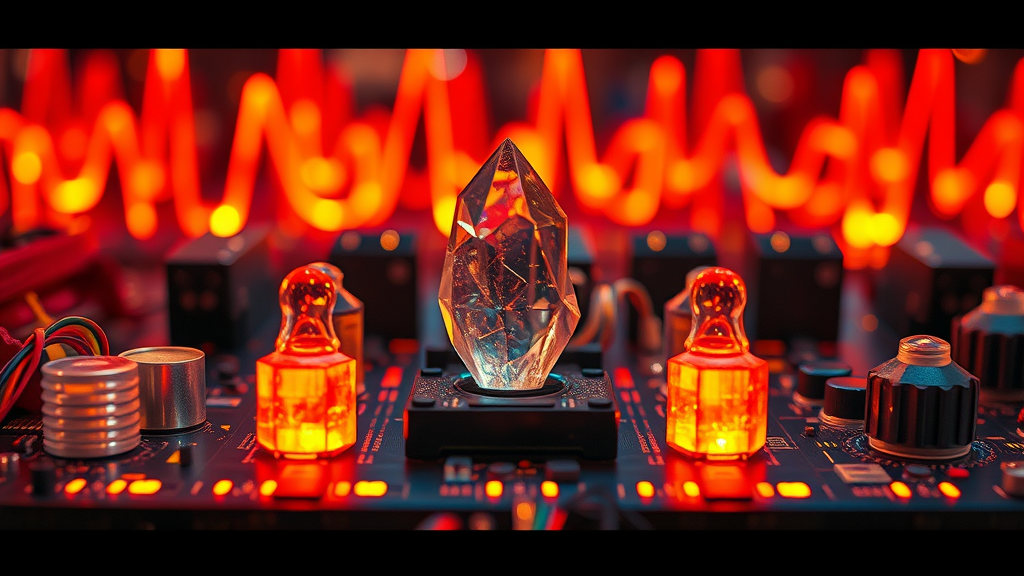
The Role of Crystals and Oscillators in Modern Electronics
The evolution of modern electronics heavily relies on various components, but two of the most critical elements are crystals and oscillators. These components act like the heartbeat of electronic devices, driving them with precision and reliability. Understanding their functions can help you appreciate the technology that surrounds you daily.
At the core of many electronic systems is the crystal, a small piece of material, usually made from quartz, that has unique electric properties. Crystals are used to create stable frequencies, which is crucial for the operation of oscillators. When you apply an electric field to a crystal, it vibrates at a specific frequency. This property allows it to maintain a consistent signal, which is essential in various applications, such as clocks, radios, and computers.
Oscillators, on the other hand, are circuits that produce a repetitive electronic signal, often in the form of sine waves or square waves. They rely on crystals for their stability but can also function without them using different components to achieve oscillation. Oscillators can be found in everything from simple electronic toys to sophisticated communication systems.
Here are some key roles that crystals and oscillators play in modern electronics:
- Timekeeping: Crystals are fundamental in quartz watches and clocks. Their consistent frequency allows accurate time measurement, making them essential in timekeeping devices.
- Frequency Generation: Oscillators provide the necessary frequencies for radios, television, and wireless communication. They ensure that signals are transmitted and received without interference.
- Signal Processing: In devices like smartphones and computers, oscillators synchronize operations. This synchronization is important for data transmission, processing, and sound modulation.
- Control Systems: Crystals and oscillators play a significant role in control systems, which ensure that machinery operates smoothly. For example, in robotic systems, they help maintain timing and sequence operations.
- Consumer Electronics: From televisions to gaming consoles, oscillators and crystals are fundamental components that allow devices to function efficiently and effectively.
One of the most significant advancements in this field is the miniaturization of crystals and oscillators. As technology progresses, there is a constant demand for smaller, lighter, and more efficient components. This need has led to the development of surface acoustic wave (SAW) devices and microelectromechanical systems (MEMS), which integrate oscillators into smaller packages while maintaining high performance.
The importance of crystals and oscillators extends beyond consumer products. In the aerospace and defense sectors, these components are crucial for navigation systems, satellite communications, and radar technologies. Their reliability and precision are vital for applications where failure is not an option.
Another fascinating aspect of modern oscillators is their adaptability. With advancements in technology, they are becoming more versatile, allowing for frequency tuning and adjustments to suit different applications. This flexibility is essential in telecommunications, where variable frequencies are necessary to minimize interference and maximize efficiency.
You may also encounter crystal and oscillator technology in innovative applications like bioelectronics. These systems use oscillators to monitor biological signals, aiding in medical diagnostics and wearable technology. This intersection of electronics and biology showcases the versatility of these components.
Environmental sustainability is a growing concern in the electronics industry. As we strive for greener solutions, the manufacturing process of crystals and oscillators evolves. Modern production techniques aim to reduce waste and energy consumption, making these components more eco-friendly without sacrificing quality or performance.
Crystals and oscillators are integral to the functionality of modern electronics. Their roles are vast and varied, impacting everyday consumer products and specialized technologies alike. As technology continues to advance, so too will the capabilities of these essential components, paving the way for even more innovative applications in the future.
In the fast-paced world of electronics, one thing is certain: the heartbeat provided by crystals and oscillators will continue to be at the forefront of technological advancements.
Understanding Resonance: How Crystals Function in Circuits
Have you ever wondered how your smartphone can stay connected, or how your gaming console keeps the action moving so smoothly? The secret often lies in tiny components called crystals. These crystals hold a special place in electronics thanks to their extraordinary ability to resonate at precise frequencies. Understanding resonance and how crystals function in circuits can give you a deeper appreciation for the technology we use every day.
What Are Crystals?
Crystals, particularly quartz crystals, are piezoelectric materials, meaning they produce an electric charge when subjected to mechanical stress. This property makes them incredibly useful for a variety of electronic applications. Because of their stability and reliability, crystals are often used to control oscillations in circuits.
Resonance Explained
Resonance is a phenomenon that occurs when an object is able to vibrate at a specific frequency. In the context of crystals in electronic circuits, resonance allows these components to produce stable frequencies, which is essential for the performance of many devices. When a crystal is placed in an electronic circuit, it can oscillate, or vibrate, with minimal energy loss.
How Crystals Function in Circuits
When a crystal is used in a circuit, it acts as a frequency-selective component. The frequency at which the crystal vibrates is determined by its physical characteristics, such as its size and shape. Here’s how this works:
- Oscillation Creation: When an electrical signal is applied to the crystal, it begins to oscillate. The frequency of this oscillation can be finely tuned by adjusting the crystal’s dimensions.
- Stability: The oscillation created is incredibly stable, meaning the frequency does not easily vary over time. This stability is crucial for functions like keeping time in watches or maintaining communication signals in smartphones.
- Signal Generation: Crystals can generate a specific frequency signal that can be amplified and transmitted. This is essential for radio broadcasts and wireless communication.
The Role of Resonance in Electronics
In electronic circuits, resonance impacts the overall performance in several ways:
- Tuning: Many radios and communication devices use resonance to tune into specific frequencies. The resonance effect allows these devices to select and amplify desired signals while filtering out noise.
- Stability: Devices that require precise timing, like clocks and computers, rely on crystal oscillators. The resonance characteristics of crystals ensure that signals remain consistent and separated.
- Energy Efficiency: Because crystals can oscillate with little energy loss, they contribute to more energy-efficient electronic devices. This is especially important in battery-operated gadgets.
Applications of Crystals in Modern Electronics
Crystals are found in countless electronic devices you use daily. To elaborate:
- Quartz Watches: They utilize the precise oscillation of quartz crystals to keep accurate time.
- Smartphones: Crystals are crucial in mobile devices for stabilizing frequencies, enabling effective communication, and ensuring accurate touch responsiveness.
- Computers: The clock speed of a computer, which influences overall performance, is maintained using crystal oscillators that resonate at predefined frequencies.
- Communication Devices: Radios, televisions, and other wireless communication devices rely heavily on crystals to maintain clear and stable signals.
Future of Crystals in Electronics
As technology continues to evolve, so does the role of crystals in electronic circuits. Research is ongoing to develop even more advanced crystal materials and configurations that enhance performance and efficiency. Innovations like flexible electronics and higher-frequency applications may reshape how we think about and use this technology in the future.
Crystals and their ability to resonate make them the heartbeat of modern electronics. They play a vital role in providing stability, accuracy, and efficiency in various devices, ensuring that our tech-driven world operates seamlessly. Understanding how they function in circuits helps us appreciate the underlying complexity that powers our everyday tools.
Comparing Different Types of Oscillators: Applications and Advantages
Oscillators are crucial components in the electronic world. They define how circuits generate waveforms, and different types of oscillators serve specific needs. Each type comes with its own set of applications and advantages, making them suitable for various scenarios. Understanding the distinctions between these types helps you choose the right one for your project.
What Are Oscillators?
Essentially, oscillators are devices that generate periodic signals, typically in the form of sine waves or square waves. They convert direct current (DC) from a power source into an alternating current (AC) signal. This periodic signal can then be used for various tasks, including timing, wave generation, and modulation in communication systems.
Types of Oscillators
In this vast field of electronics, oscillators can be categorized into a few main types:
- Relaxation Oscillators: These oscillators create non-sinusoidal waveforms like square or sawtooth waves. They are simple in design and are often used for timer applications.
- LC Oscillators: With their reliance on inductors (L) and capacitors (C), LC oscillators can produce smooth sine waves. They find use in radio frequency applications due to their ability to maintain high frequencies.
- Crystal Oscillators: Renowned for their precision, these oscillators utilize quartz crystals to regulate frequency. They are widely used in watches and communication devices for stable timekeeping.
- Phase-Locked Loop (PLL) Oscillators: These oscillators lock onto a specific frequency, allowing for stabilization and control in communication systems.
Relaxation Oscillators
Relaxation oscillators work by charging and discharging a capacitor, leading to a repeated cycle. Their simplicity is a major advantage, making them perfect for basic applications like timers and signal generators. Because they generate square and sawtooth waveforms, they are commonly used in buzzers, alarms, and light flashers. The low cost and ease of implementation make them a go-to for hobbyists and professionals alike.
LC Oscillators
LC oscillators, as the name suggests, use inductor-capacitor pairs to generate oscillations. Their smooth sine wave output is ideal for applications needing high-quality audio signals. You’ll find them in radio transmitters and receivers, where they help with tuning and frequency modulation. Additionally, LC oscillators can operate at various frequencies, which gives them flexibility in design.
Crystal Oscillators
Crystal oscillators are widely recognized for their ability to maintain incredibly precise frequencies. They rely on the piezoelectric properties of quartz crystals, which vibrate at a specific frequency when an electric current passes through them. This precision makes them invaluable in clocks, watches, and GPS systems, where exact timing is crucial. While they are more expensive than other oscillator types, their reliability and durability offset the cost.
Phase-Locked Loop (PLL) Oscillators
PLL oscillators are phenomenal for their stability and flexibility. By locking onto an incoming frequency, they can produce a stable output frequency. This feature is especially beneficial in communications, where consistent signal quality is essential. PLLs are also used in frequency synthesizers, allowing devices to generate multiple frequencies using a single reference. The adaptability of PLLs makes them a favorite in both consumer electronics and industrial applications.
Comparing the Types
When comparing different types of oscillators, several factors come into play:
- Precision: Crystal oscillators lead the charge, while relaxation oscillators lag.
- Frequency Range: LC oscillators excel, particularly for high-frequency outputs.
- Complexity: Relaxation oscillators are the simplest, making them user-friendly.
- Cost: Relaxation and LC oscillators generally come at lower prices, whereas crystal oscillators can be pricier due to their components.
Choosing the right oscillator hinges on your project’s needs. Whether you’re working on a high-tech communication system or a simple electronic buzzer, understanding the characteristics and advantages of each type will guide you to the perfect solution. Each oscillator type has unique strengths, and knowing these can enhance your project’s performance and reliability.
The Impact of Temperature on Crystal Performance in Devices
Crystals play a critical role in the performance of many electronic devices, functioning as precise frequency control elements and timers. However, their efficiency can be significantly affected by temperature fluctuations. Understanding how temperature impacts crystal performance is essential for both designers and users of electronic technology.
When it comes to crystals, their primary operation relies on piezoelectric properties. This means they generate an electric charge in response to mechanical stress. The temperature affects this mechanical stress, and consequently, the frequency output of the crystal. Temperature variations can lead to frequency shifts, which can disrupt the operation of devices such as clocks, radios, and computers.
Temperature Coefficient of Frequency
Each crystal has a specific temperature coefficient of frequency (TCF) that quantifies how much the frequency changes with temperature. There are key points to consider regarding the TCF:
- Positive and Negative TCF: Crystals can have positive TCF (frequency increases with temperature) or negative TCF (frequency decreases with temperature). The choice of crystal is crucial depending on its application.
- Operating Range: The effective operating range of a crystal can be limited by its TCF. Designers must select crystals that will operate efficiently within the expected temperature ranges of the intended environment.
- Stability: A crystal with a designed TCF can achieve temperature stability, ensuring that frequency variations stay within acceptable limits during temperature fluctuations.
Effects of Temperature on Different Types of Crystals
Understanding how various types of crystals respond to temperature changes can provide deeper insights into their application:
- Quartz Crystals: Widely used in diverse electronic devices, quartz crystals have reliable performance across a broad temperature range, making them suitable for general use. However, they still experience a measurable TCF that can impact precision.
- TCXO (Temperature Compensated Crystal Oscillator): TCXOs are specially designed to reduce frequency drift due to temperature changes. By incorporating temperature compensation techniques, TCXOs can deliver greater frequency stability compared to standard crystal oscillators.
- MCXO (Microcontroller Compensated Crystal Oscillator): Similar to TCXOs, MCXOs utilize control algorithms and circuitry to dynamically adjust frequency output based on real-time temperature readings, thus enhancing performance in environments with varying temperatures.
Mitigation Strategies
As temperature can significantly impact crystal performance, various strategies can be implemented to mitigate this effect:
- Temperature Control: Keeping devices within a stable temperature range is one effective way to ensure crystal performance. Utilizing enclosures or insulating materials can help regulate temperature.
- Calibration and Compensation: Regularly calibrating devices can account for frequency shifts due to temperature variations. In critical applications, pairs of crystals may be used with redundant systems as a backup.
- Designing with Temperature in Mind: Engineers can select appropriate crystals brave temperatures expected for specific environments. Sourcing crystals for the anticipated operational environment is crucial for design reliability.
Additionally, it’s essential to consider the long-term behavior of crystals under temperature stress. Continuous cycling between different temperatures, known as thermal cycling, can lead to stability issues or even failure in extreme cases. Even minor shifts might accumulate over time, leading to malfunction. Therefore, assessing the thermal robustness of crystals for their predicted lifespan is vital.
A deeper understanding of how temperature affects crystal performance can significantly enhance device reliability. Whether you’re designing new electronics or using existing devices, being aware of these temperature factors can lead to better performance and reduced operational failures in your equipment.
Ultimately, recognizing the relationship between temperature and crystal behavior is a key component of engineering and operating electronic devices. By employing the right strategies and tools, you can maximize the efficiency and longevity of your devices in an array of temperature conditions.
Innovations in Crystal Technology: Future Trends in Electronics
The world of electronics has witnessed tremendous shifts over the years, and crystal technology stands at the core of these innovations. Crystals are essential components that help to stabilize and manage frequencies in electronic devices. In recent years, advancements in crystal technology promise to shape the future of electronics in exciting ways. Understanding these trends will help you appreciate the vital role crystals play in modern technology.
One key innovation is in the development of high-frequency quartz crystals. With the continued rise of 5G technology and beyond, there is an increasing demand for components that can operate at higher frequencies. These high-frequency quartz crystals can cover a broad range of applications, from smartphones to advanced communication systems. By enhancing the performance and reliability of electronic devices, they ensure seamless connectivity and communication.
Another area of growth in crystal technology is the use of new materials. Traditional quartz has been widely used, but researchers are exploring alternatives like silicon carbide (SiC) and gallium nitride (GaN). These materials offer greater efficiency and performance in high-power applications. For instance, SiC crystals can operate at higher voltages and temperatures, making them ideal for use in renewable energy systems and electric vehicles.
Furthermore, advancements in crystal fabrication techniques contribute to improved crystal performance. Techniques like molecular beam epitaxy and pulsed laser deposition enable precise control over crystal growth. This offers the capability to produce customized crystals tailored to specific applications. By manipulating the properties of these crystals, manufacturers can create devices that are lighter, smaller, and more efficient.
The rise of the Internet of Things (IoT) is another factor driving innovation in crystal technology. As more devices become connected, the need for accurate timing and synchronization becomes critical. This is where quartz crystals excel, providing reliable timing signals. The miniaturization of these crystals allows for their incorporation into compact IoT devices without compromising on performance. This means your smart home gadgets can work seamlessly together, ensuring they respond correctly and quickly to your commands.
In addition, the demand for sustainable technology is making its mark on crystal innovation. As environmental concerns grow, there’s a push for eco-friendly materials in electronics. Researchers are exploring recyclable and biodegradable alternatives to traditional crystals. This shift will not only reduce electronic waste but also lower the carbon footprint of the electronics industry.
- High-frequency quartz crystals are essential for seamless connectivity.
- New materials like SiC and GaN enhance high-power applications.
- Improved fabrication techniques allow custom crystal designs.
- IoT demands precise timing, making quartz crystals pivotal.
- Sustainability drives the development of eco-friendly crystal materials.
As we look toward the future, the impact of these innovations in crystal technology will be profound. They will not only improve the performance of existing electronic devices but also pave the way for entirely new applications. For instance, in the healthcare sector, crystals embedded in wearable devices can monitor vital signs with greater accuracy. This can lead to better patient outcomes by enabling real-time health tracking and personalized care.
Moreover, the role of crystals in the development of quantum computing is gaining attention. Crystals can serve as quantum bits or qubits, which are the building blocks of quantum technology. As research progresses, crystals may play an integral role in harnessing the power of quantum computing for various applications, from advanced algorithms to improved cybersecurity.
On a more consumer-centric level, crystal technology is expected to enhance audio and video devices. Innovations in piezoelectric crystals can lead to sharper sound quality and brighter visuals. Imagine listening to your favorite music or watching movies with a level of clarity and richness that remains unmatched. Your entertainment experience will be taken to new heights as these technologies evolve.
Innovations in crystal technology hold immense promise for the future of electronics. With the ongoing developments in high-frequency crystals, new materials, and fabrication techniques, devices will not only become more efficient but also more sustainable. This forward momentum ensures that crystals will continue to be the heartbeat of the electronics industry, driving progress and ushering in a new era of technological advancement.
Conclusion
Crystals and oscillators are undeniably the heartbeat of modern electronics, shaping the technology that powers our daily lives. By providing stable frequency references, they enable accurate timing and signals in devices ranging from smartphones to intricate industrial equipment. Understanding how crystals resonate allows engineers to harness their unique properties effectively, ensuring optimal performance in various circuits.
As we explored the different types of oscillators, it became clear that each has its unique advantages and applications. From simple relaxation oscillators to precision crystal oscillators, the choice can significantly impact device efficiency and reliability. Furthermore, we discovered how environmental factors, particularly temperature, can influence crystal performance. This understanding is crucial for design engineers who aim to create devices that function flawlessly across varying conditions.
Looking ahead, innovations in crystal technology promise exciting advancements. As researchers delve into new materials and fabrication methods, we can anticipate even greater accuracy and efficiency in oscillators. These developments will not only enhance current electronics but also pave the way for groundbreaking applications in emerging fields like quantum computing and Internet of Things (IoT) devices.
Ultimately, the synergy between crystals and oscillators creates a foundation for dynamic electronic systems. Staying informed about these technologies will enable you, whether as a consumer or a professional, to appreciate and leverage the functionalities they bring to the ever-evolving world of electronics.
Why Choose Cobra Electronics as Your UK Microcontroller Supplier?
When sourcing reliable development boards and components, it is important to work with a supplier that offers genuine, high-quality products and consistent availability. Cobra Electronics provides a comprehensive range of Arduino boards, Raspberry Pi kits, sensor modules, breakout boards, and accessories suitable for both hobbyist prototyping and professional embedded system development. As a trusted electronics components and parts supplier in the UK, we ensure fast delivery, competitive pricing, and knowledgeable support to help you find exactly what your project requires. Learn more about our full component offering here: Cobra Electronics.